Making the Human Side of the Business More Valuable: Raghav Kotha on MSP Transformation
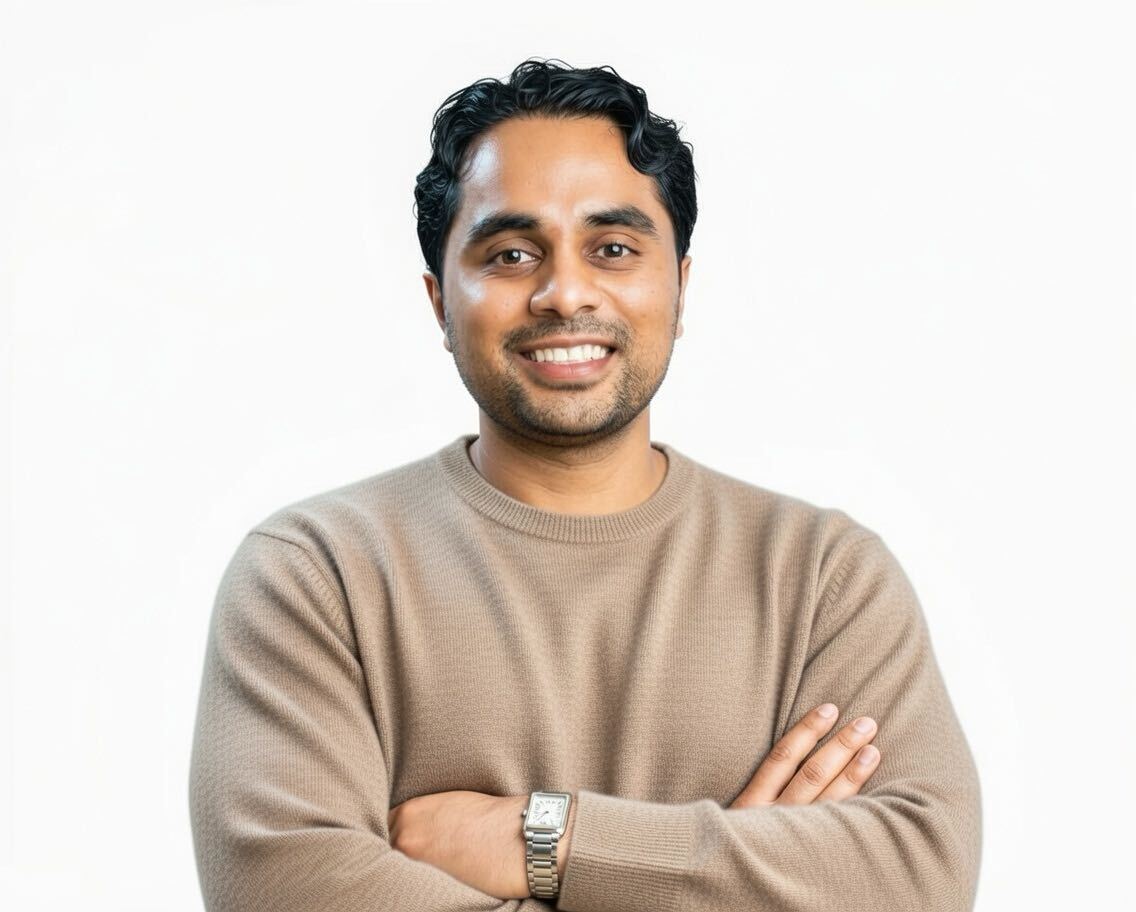
Our Head of Strategy & Growth, Raghav Kotha, joined us to talk about our approach to partnering with MSP founders, the next chapter of managed services, and how AI is reshaping the future of work.
Let’s start at the beginning. What brought you to Shield?
I started my career in investment banking before joining Insight Partners to invest in enterprise software and AI. Insight was an early investor in Kaseya, which gave me my first real exposure to the MSP ecosystem.
From there, I joined OwnBackup, a SaaS BCDR company which sometimes sold through MSPs and was later acquired by Salesforce. I wore a lot of hats at OwnBackup, including standing up our Office of AI and Digital Transformation in 2024. This gave me a front-row seat to just how fast the world was changing.
When I learned about Shield through one of our investors, it immediately felt like a place that would allow me to apply all of my experience across AI, operations, and investing in service of a mission I deeply believed in.
So much of what I had seen earlier in my career was geared toward larger companies, which had access to the best tools, talent, and resources. Shield is closer to the local businesses in neighborhoods like the one I grew up in. Regional and local MSPs support the dentists, law firms, manufacturers, and other SMBs that keep communities running.
The chance to participate in the transformation of an entire industry that plays a critical role in the American economy felt energizing.
When you meet with MSPs, how do you describe what Shield is building?
I often say Shield is a home for the best founder-led IT services firms that aren’t done building. Our goal is to help the owners of these businesses scale without giving up what made them the best, and help them stay ahead as this category evolves.
We make three commitments. First, we want MSP owners to know that this is a partnership, and that our deals are structured such that they can keep meaningful ownership in their business. There's no exit clock and founders retain their equity, leadership, and brand.
Second, we build technology based on what we learn in the field. Our teams deploy into partner firms and sit alongside the engineers, customizing around real workflows.
Third, the technology has to show up in the service we offer our customers. Our first two products, Sentinel and Spectre, were built in live environments with individual partner firms. Today, they handle some of the most time-consuming ticket categories in IT services, cutting median time-to-resolution by more than half for several of those tasks.
Everything we do is founder-led. Each company we partner with is an investment in the people building the next chapter of their business.
Our job is to make the human side of the business more valuable. When I think about what defines MSPs that are best-in-class, it’s how well they know their customers.
You spend a lot of time with owners. What are they really weighing when they think about the next chapter, and what do most buyers misread about that?
What has stood out to me in conversations is how it’s almost never just about price.
Of course, the financial outcome matters. For most founders, the company represents decades of personal sacrifice, so they are understandably deliberate about what comes next. But founders are also thinking about the people they have hired, the customers they have served for years, and whether the company will still feel like itself after a transaction.
We shaped our approach so all three of these stakeholders win. Customers get modern, AI-led services. Employees get access to new technology and career paths a standalone business typically can't offer. Owners get a thought partner while retaining ownership in the business they built.
I'll also say this plainly: we aren’t the right partner for everyone. If an owner wants to sell and fully step away, then they may be better served by someone else. We are very candid about that.
We’re keen to work with founders who look at what’s ahead and want to actively shape the next era.
A lot of platforms are saying similar things to owners right now. What does Shield believe about where this market is going that the others don't, or won't say out loud?
We believe the world is at an inflection point. The ways people work today and the types of work that create value won’t look the same in the years to come. What most won't say is that this shift isn't optional. Firms that keep selling the current model will find it harder to defend their value every year. That is especially true in managed services because MSPs sit so close to the technology environments their customers depend on every day.
As AI takes on more repeatable work, the role of the MSP will become more important. The value shifts from keeping up with volume to spending more time with customers, strengthening their environments, and helping them understand where next-generation technology can move their businesses forward. The great firms will make this shift and become more valuable as a result.
This also has meaningful implications for owners who are thinking about the future value of their business. If part of their thesis is to sell one day, then the durability and long-term value of their business, and their acquirer’s business, really matter.
We believe the world is at an inflection point. The ways people work today and the types of work that create value won’t look the same in the years to come. What most won't say is that this shift isn't optional.
Where do you see Shield’s role in helping MSPs navigate that next chapter?
Our job is to make the human side of the business more valuable. When I think about what defines MSPs that are best-in-class, it’s how well they know their customers. They understand when something is urgent, when a workaround is not good enough, or when a business requires a real thought partner. AI should make room for more of that intuition.
We’re driving transformation by helping our partners build stronger human-computer teams, where technology handles the repeatable work and people have more time to focus on higher-value customer needs. This doesn’t mean one central team has all the answers. The best ideas in this industry often come from the people closest to the customer, the work, and the operational realities of running an MSP every day.
That is why we lean so heavily into our one plus one equals three philosophy. We have 19 partner companies, and we are very intentional about bringing those companies together on a regular basis. Each of these companies is unique, with a different customer base, different operational maturity, different scar tissue with tooling, and more.
Everything we build with one partner makes the next deployment faster and more powerful. Every MSP learns not just from its own operating experience, but from our platform layer as well. That’s Shield’s advantage.
For MSP founders: Learn what partnering with Shield looks like.
Interested in building with us? We’re hiring.