
How NetAscendant broke through its hiring ceiling and unlocked 25% more capacity with Shield
At a Glance
NetAscendant, a leading MSP in the Permian Basin, partnered with Shield to grow more efficiently and empower its team and its customers with AI
Today, 50%+ of incoming tickets are resolved autonomously, freeing up ~25% additional client capacity without added headcount
Median resolution time for AI-handled tickets is under 15 minutes, compared to a 5.5-hour baseline
Median resolution time for technician-handled tickets fell from eight hours to just over 1 hour, with median first response time dropping below 20 minutes
"The first one I remember was phishing emails. Forge handled those tickets accurately and almost instantly. It resolved the issue, communicated with the customer, and then we immediately got feedback from the customer about the speed of response. That really blew me away."
Jack Cohlmia, CEO & Co-founder, NetAscendant
THE CHALLENGE
Growing at 39% a year, but with a ceiling in sight
In 2017, Jack Cohlmia and Dan McCown founded NetAscendant in Midland, Texas. Eight years later, the company was serving more than 100 small and mid-sized businesses across the Permian Basin. Demand remained strong, but the pair saw two looming challenges ahead.

October 2017. NetAscendant co-founders Jack Cohlmia and Dan McCown shortly after starting the company
“We grew significantly from 2022 through 2024, roughly 39% year-over-year,” Jack says. “The last thing we ever wanted was a drop-off in service delivery.” Their “N+1” approach to hiring kept support capacity ahead of demand, protecting customers but making each expansion a hiring challenge.
"Labor is one of the biggest constraints in Midland," Dan explains. "It has had one of the lowest unemployment rates in the state for the past decade."
AI introduced a second challenge. NetAscendant had already automated a labor-intensive invoicing process internally, but building a comprehensive, competitive AI toolset was a different matter. They saw the direction the market was headed and knew they had to get in front of it.
Responsiveness was one of NetAscendant’s strongest differentiators. AI also had the potential to drastically improve their already strong response times. However, they also knew if competitors adopted it faster and more effectively, their advantage could erode. All roads led to leveling up their AI capabilities, but that wasn’t easy.
"We did not have enough personnel to do the R&D and produce that toolset ourselves,” says Dan. “If we waited around for one of the big RMM or PSA providers to give us that toolset, we could miss out."
As competitors accelerated their adoption of AI, NetAscendant needed a more scalable growth model.
THE PARTNERSHIP
Built onsite, with the team
Jack and Dan wanted a partner that could bring technology and operating support without disrupting the business they had built, and without asking them to trade their company for equity in someone else's.
"Almost every other model had some equity that could roll into the bigger company, but we would have so little influence over the success of that larger company," Dan says.
Shield's local ownership model meant Jack and Dan retained ownership in NetAscendant and kept building the company they started.
"After the deal was done, we went to work the next day just like we had for the last eight and a half years," Jack says.
Shield established shared services within the first 90 days, taking back-office administrative work off NetAscendant's plate. Then Shield's technology team, joined by members of the OpenAI team, came to Midland to work directly alongside NetAscendant's technicians.
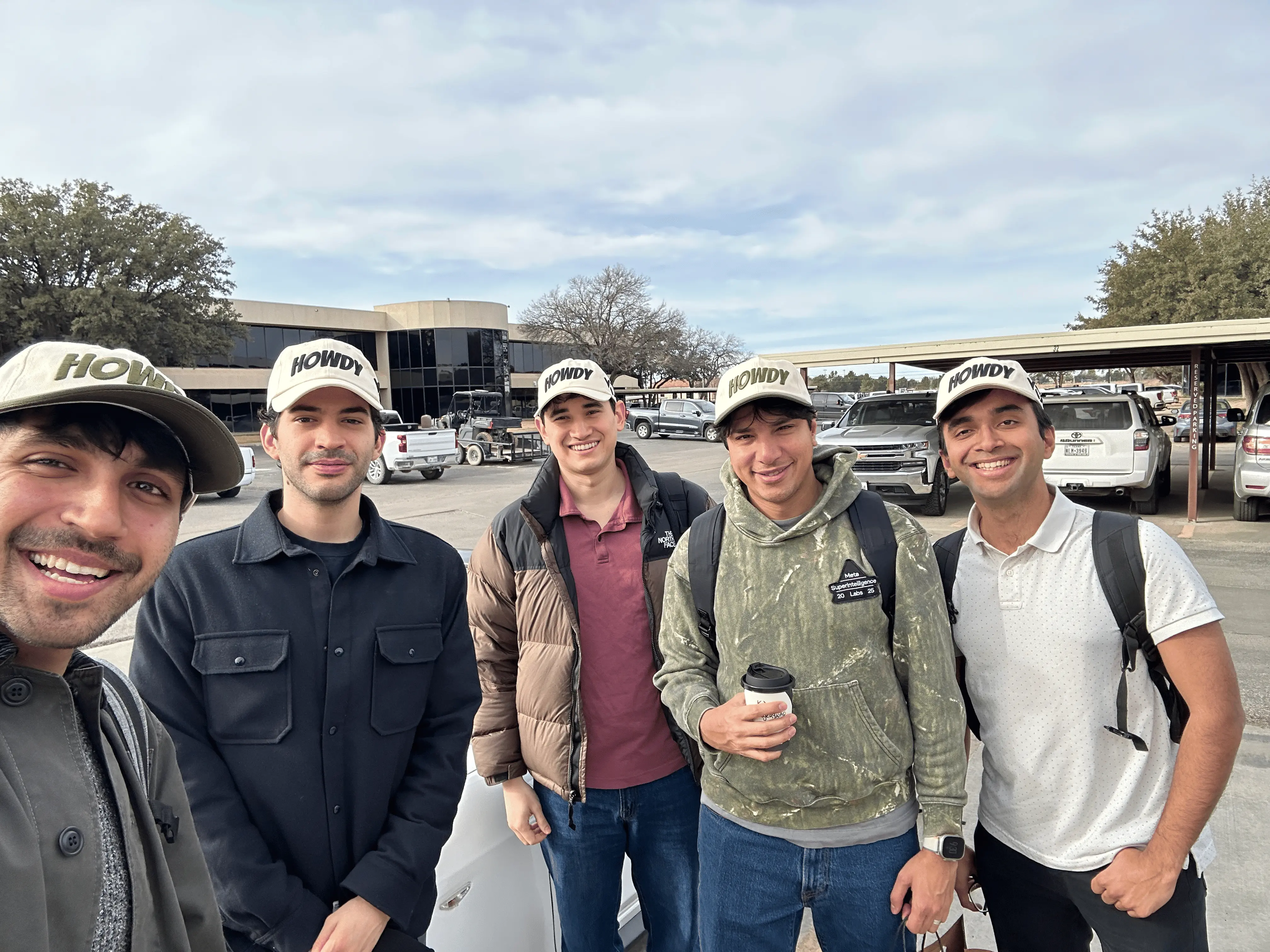
April 2026. The Shield engineering team touches down in Midland, Texas
"It was a bunch of superstar developers who came to our office in Midland, Texas,” Jack says. “Knowing their capabilities, backgrounds, and expertise, and seeing them focused on developing the product in our office, was something to behold.”
The team shadowed NetAscendant’s employees to understand how tickets arrived, how technicians investigated them, where delays occurred, and which workflows could be redesigned.
“I have never had a good experience with software implementation. It always felt like, ‘I have to do it myself,’” Dan says. “That has definitely not been the case with Shield.”
Together, the teams deployed Forge, Shield's AI operating system for IT services. Forge began by gathering background information before a technician started work on a ticket, learning from watching the technicians work in the process. It progressed quickly to resolving certain tickets end to end.
“The speed with which the product was developed and refined was phenomenal,” Jack says. “We were seeing unbelievable developments day over day.”
The rollout required honest change management with the team. “There was some unease. There is no doubt,” Jack says. “But several months down the road, there are not any concerns. The team understands they have one of the best tools in the world in their tool belt, and they are leaning into it.”
THE RESULTS
From resource constrained to "ready for more users"
Today, the constraint has flipped from capacity to demand generation.
“I think we can handle 25% more users,” Dan says. “I do not know exactly what we would have done differently six months ago, but right now, we’re ready for more users.”
That confidence rests on several improvements.
The Impact of Forge Forge expanded the amount of work NetAscendant could address and accelerated the work that remained with technicians. | ||
Before Forge | With Forge | |
|---|---|---|
Technician resolution speed | Nearly 8 hours median | Just over 1 hour (by week 5) |
Tickets closed within 24 hours | 70% | 90% |
E2E ticket resolution speed | 5.5-hour company-wide median baseline | Autopilot: <15 mins |
Capacity for growth | Paced by available service capacity. | Capacity to support ~25% more users with the current team |
More problems get solved: Forge is expanding the amount of work the company can address. "This is not just taking existing solved tickets and automating 50% of them," Dan explains. "It is increasing the number of tickets being handled and then resolving more than 50% of those."
For example, patch failures that previously competed with customer requests for limited technician time are now investigated, diagnosed, and remedied automatically, improving service without pulling technicians away from higher-priority customer needs.
Increased capacity and more capable technicians: Forge has given the team room to keep growing. Jack and Dan estimate that the existing team can support 25% more users today.
FORGE AT WORK
Forge’s AI Engineer has 2 modes: autopilot and copilot.
This example is in autopilot mode, where it resolves a complex ticket, end to end.
The ticket arrived on Sunday and would otherwise have left the user unable to work until Monday.
Forge gathered the relevant account and user context, diagnosed the problem, implemented the fix, and carried the ticket through resolution.
Knowing the user was more technical, Forge proactively shared a detailed explanation of what went wrong and how it was fixed.
View the fictionalized example based on a real support case →
Condensed for clarity. Identifying details, dates, and links are fictionalized, and credentialed URLs are omitted.
Forge also makes technicians more effective. By week five, median resolution time for technician-handled tickets had fallen from eight hours to just over one hour, while median first response dropped below 20 minutes.
Now the team is taking on more complex work. NetAscendant’s service desk lead handles a harder mix of tickets, while a junior technician is working one or two levels above his previous capability. Getting there pushed them to adapt to new ways of working, but that learning curve has made the entire team more capable.
Better service, around the clock: Tickets Forge handles end to end resolve in a median of under 15 minutes, compared with a company-wide baseline of five and a half hours. About 90% of tickets now close within 24 hours, up from 70%. Tickets arriving after 6 p.m. can now be resolved or clarified overnight, giving technicians the information they need to act when they arrive the next morning. Forge unlocks a faster and better customer experience.
FORGE AT WORK
This example is in copilot mode, where Forge executes based on a technician’s expert judgment.
The customer asked NetAscendant to terminate the emails of three employees.
Forge verified the accounts and planned the work, but paused when the requester’s authorization could not be confirmed.
After technician authorization, Forge disabled access, preserved the mailboxes, removed group access and licenses, and scheduled a three-seat Pax8 reduction across 37 tool calls.
A final review from the technician authorized the reply, time entry, and closure.
View the fictionalized example based on a real support case →
Condensed for clarity. Identifying details, dates, and links are fictionalized, and credentialed URLs are omitted.
In one recent week, Forge received almost twice as many positive CSAT responses as the next individual technician. The recurring theme in customer comments was rapid response times.
None of these improvements have replaced the relationship-based work NetAscendant's customers value. “We sell trust in our people,” says Jack. “That is what our customers buy. They know they are going to get us on the phone, and their issues will be taken care of.”
LOOKING AHEAD
A helpdesk full of virtual CIOs
For MSP owners weighing the same transition, Jack is candid about what it takes. "I would advise them to throw in with the AI team fully and embrace it,” he says. “There will be bumps. It is disruptive, but the payoff is there."
Technology made their team more capable and more essential. Now they want to bring that same advantage to their customers with AI-enabled solutions.
"I have a vision where the people sitting in our helpdesk are like client advisors. Almost a room full of virtual CIOs.”
_____
Learn more about NetAscendant here.
For MSP founders: Learn what partnering with Shield looks like.
Interested in building with us? We're hiring.