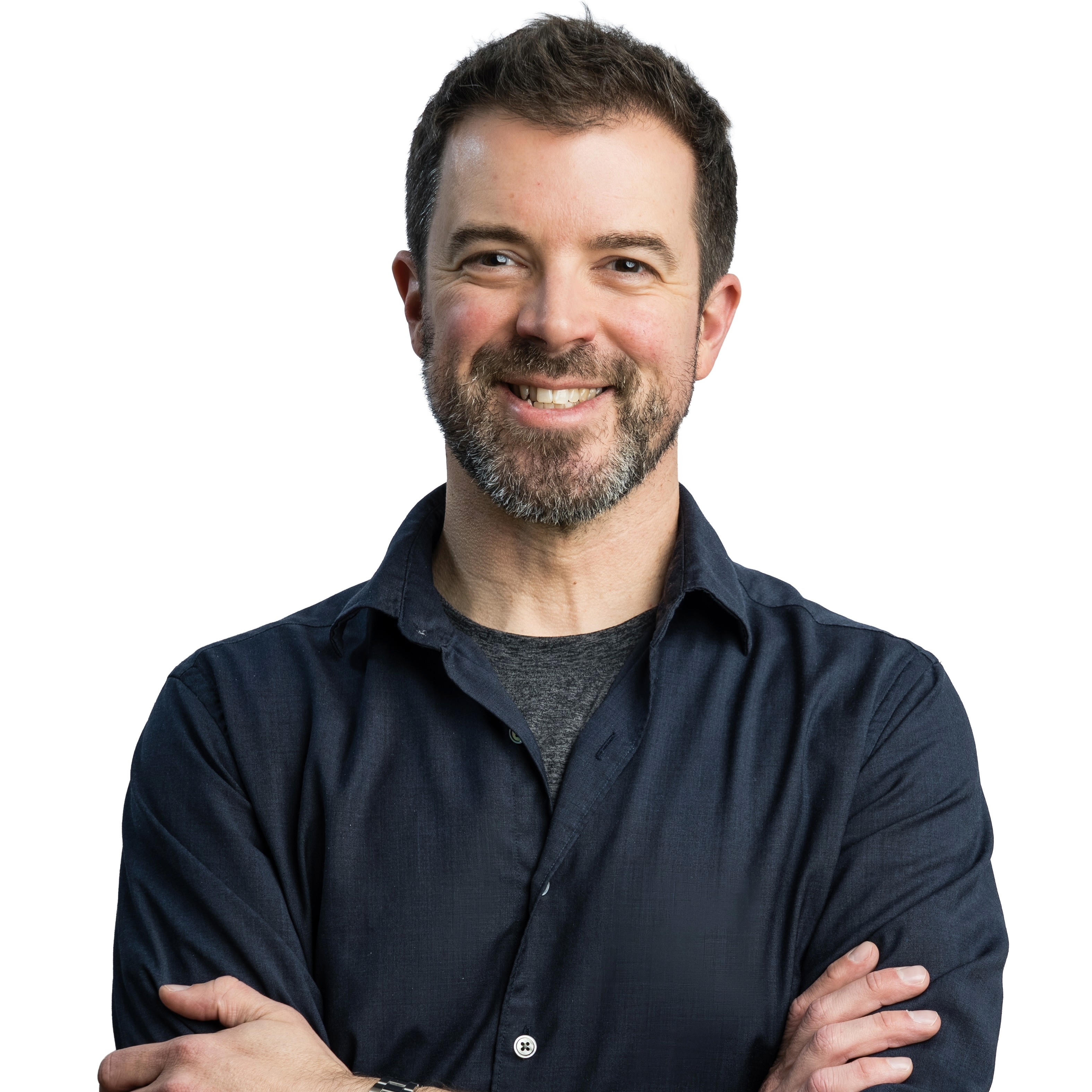
Jim Siders, CEO of Shield, joins us to speak about what drew him to Shield, how he approaches building technology that expands opportunity for businesses, and what he believes this next chapter will unlock.
What brought you to Shield?
My path into technology wasn’t conventional. I studied music and spent most of my twenties as a professional trombonist. Later in my twenties, I realized I was really curious about technology and how it shapes the world.
That led me to Palantir. I went on their Careers website, applied, went through about twelve interviews, got rejected, and then they called me back and offered me a temporary contractor role. I ended up staying for thirteen years across a lot of different roles.
Over time, I developed some pretty strong views on what excellence in IT and technology should look like and how it can actually differentiate a business or be a real boost to it, rather than a tax on the organization.
That’s what stood out to me when I met the team at Shield. As I spent more time with them, it became clear that we saw the same fundamentals. There’s a lot that technology can do to improve businesses but people aren’t even asking for these things, because they don’t know what’s possible.
We also shared the view that this really hasn’t been applied to the small and medium business segment in a meaningful way. That’s a huge opportunity. A huge part of the economy and job creation sits within that segment, and many of these businesses don’t have access to the same technology and resources as large enterprises. The gap is becoming even more visible as AI reshapes how work gets done.
So for me, it was about the mission. It felt like a natural extension of the work that kept me at Palantir.
Part of what we are building is the ability for our companies to provide those answers, whether through advisory or through actual AI-enabled products built around customer needs.
Shield has taken a strong stance on building core technology and capabilities in house. Why is that?
To answer that, you have to start with how you actually create real change. It’s very hard to create durable change from the outside. You can disrupt parts of a system, but if you want to entirely replace an entrenched model with something better, you have to be really close to the work. You have to earn the right to have an opinion.
At Shield, we believe that in order transform how businesses use technology, we have to build that technology with our companies, inside their environments, in the context of the actual work. Only later do you think about productizing it more broadly.
If you start from the outside and try to push something in, it’s very hard to get to something that actually creates generational change.
How does Shield work with companies to deliver value?
We partner with owners that are already very strong operators. The goal is to help them go from being among the best in their peer group to truly world class organizations. It’s about raising the bar by improving how they operate, deliver services, and what systems they rely on.
We also focus heavily on technology. From the perspective of the MSPs we partner with, it should feel like they have a world-class technology organization inside their business. Our engineering team embeds directly within our companies, sitting in working sessions, learning operational frameworks, mapping processes, and identifying repeatable patterns.
When you combine best-in class operations and deeply embedded world-class technology, you can fundamentally expand what these businesses are capable of delivering.
Over the next 12 to 24 months, where is Shield investing most heavily from an AI or technology standpoint?
We’re approaching this in two ways.
The first is the technicians and engineers inside the businesses we partner with. These are people who have strong relationships with customers and a lot of context. We want to amplify that and make their work even more effective. We sometimes describe it as an “Iron Man suit” for technicians. How do you take someone with that experience and make them dramatically more effective?
At the same time, we spend a lot of time within Shield thinking about longer-term structural questions. Our customers, SMBs, are trying to understand how AI will affect them, and they’re looking to their IT providers for answers.
The industry has changed a lot over the past decade. How do you see it changing in the next five to ten years?
At a high level, the model is shifting away from selling IT services to driving business outcomes. For a long time, the MSP model was relatively straightforward. Providers managed infrastructure, sold software licenses, resolved tickets, and charged based on seats or devices. That made sense when technology was scarce, difficult to build, and distributed through the channel.
The assumptions that the industry were built on are starting to break down. Hyperscalers are bundling AI directly into their platforms, compressing the value of standalone tools and bypassing the channel entirely. At the same time, the commercial model is shifting away from seat-based pricing toward usage and outcomes. What used to be stable revenue is becoming more variable, and in some cases, harder to defend.
If you talk to MSPs, there’s a general sense that things are going to change, but less clarity on exactly how. There’s a lot of discussion around moving toward outcome-based pricing instead of charging per seat or per device, but it’s certainly a difficult transition.
Scale will help some of the larger platforms navigate that shift, but a lot of smaller players are going to feel pressure. The market is starting to split between firms that can evolve their model and become true operating partners to their customers and those that remain service providers of traditional IT products.
Given that shift, how is Shield thinking about where the model goes next?
Our view is that the way to address these trends is to move up the value chain and deliver higher-value services, tie pricing more directly to outcomes, and build more resilient economics. That requires a different model than a traditional roll-up or a purely scale-driven approach.
We have also spent time internally thinking about the longer-term product vision behind that shift. Now that AI allows people to build things in much more intuitive ways, you can imagine a world where a business owner or operator can actually create solutions themselves, as long as the underlying data infrastructure and guardrails are there.
If you get that right, the business model changes. Instead of selling licenses, you can tie value to outcomes. If a customer improves their business using your tools, you participate in that. This expands the role of the MSP from a service provider to a true operating partner.
The challenge is doing that while still executing on what we’re building today. There is still a lot of work to do around improving technician workflows and service delivery. It becomes a question of building that next layer in parallel, without losing focus on the core.